
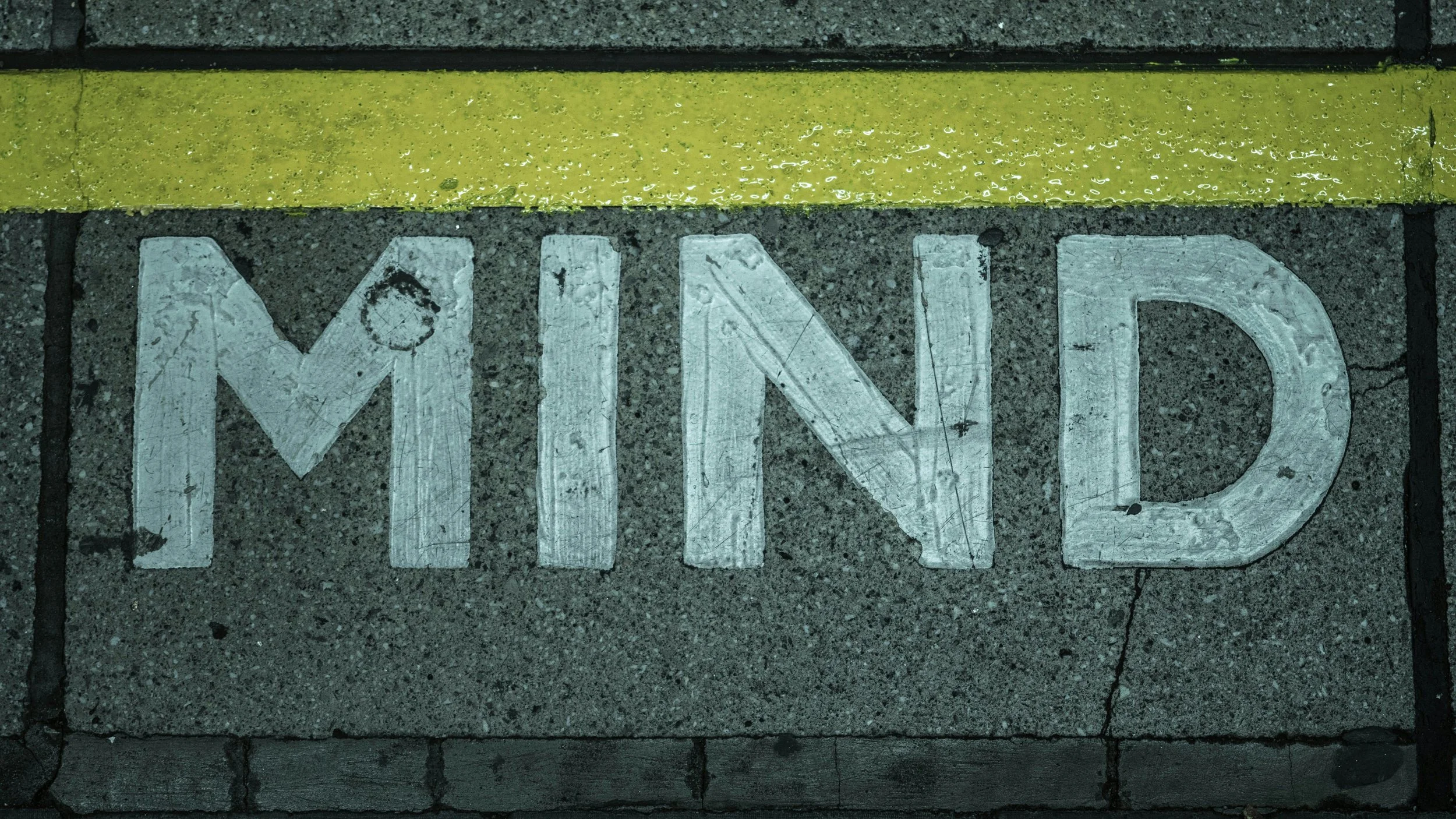
We all have two foundational modes of being. One is the active mode - it’s focused, directed action, logic, to do lists. The other is receptive - it’s broad awareness, big picture thinking, pattern recognition. These terms were first coined by American psychiatrist Arthur J. Deikman back in the 70s.
Creativity is, in many ways, the bridge between the two. It’s the ability to survey the landscape in which we find ourselves, recognise the patterns in information, and then translate that awareness into something tangible, useful, functional, or meaningful.
Any creative, of any discipline, will likely have some recognition of the difference between when they do their thinking, and when they ‘do’.
As a psychotherapist, one way I might simplify what the majority of my clients present to me with, is a dysfunction in one, or both, of these two modes.
On the active side, there could be an inhibition that’s limiting their ability to take effective action towards their ambitions, or too rigid attachment to certain beliefs in an evolving world.
At the receptive end, they might be struggling to make meaningful ‘sense’ of their experiences, or are trapped by a pattern they have identified, consciously or unconsciously, that has then created a dysfunctional or limiting belief. As you can see, one informs the other.
In fact, one informing the other is what these systems are meant to do. When our minds are functioning well, our receptive mode - that broad awareness and pattern recognition, helps us identify where our attention will be most needed or effective.
Once we’ve identified our goal, we shift to the active mode to make it happen.
When we’ve achieved our goal, a healthy system should be able to flip back to the receptive mode and pause long enough to understand how the landscape has changed as a result of our actions. In our always-on modern culture, this pause is rarely appreciated.
All of us will naturally bias one of these modes. Anyone who has a job that is very literal or procedural likely biases the active mode. There’s not much need for pattern recognition when your next steps are clear and straightforward.
Those of us in the more artistic professions likely bias the receptive mode. This pattern recognition and association is the foundation for all original thinking and insight.
But this awareness can come at a cost. Framing things another way, the active and receptive modes are like predator and prey behaviour.
Without reading too much into the loaded associations of those terms, the active mode is about singular focus on a goal. The receptive mode is about recognising potential patterns, to be able to choose a path with the best chance of success (survival). No doubt these evolved as our species used to be both.
Sadly, it’s often the case that people who bias the receptive mode grew up in environments that were unsafe or unpredictable, so they developed enhanced pattern recognition skills as a survival mechanism.
Women often bias this mode, as do most artists and ‘creatives’. There’s a reason we have the stereotype of the tortured artist who, ironically, likely uses these same skills to try and make sense of their experiences through their work.
Sometimes this can also feed into an inability to effectively move forward, like the artistic genius that never seems to be able to finish anything and lives in poverty.
One of the real challenges trying to help a mind that is this open, to be able to move forward effectively, is that their ability to synthesise patterns from such a vast array of input into something that makes ‘sense’ can trap them in perspectives and world views that are not functional, and not easily released.
What’s seen cannot be unseen. When we’ve gone too far down the rabbit hole, it’s not so easy to back our way out.
So we have a couple of options. We can keep going forward, to seek the possibility of a more functional, higher level perspective that can integrate the contradictions of everything below it.
Or we can turn around and face the unhealed fears, shame, or other emotional wounding, that are driving us to keep seeking further.
In therapy, I use a mix of the two. Insight to help orient ourselves in more functional, and less painful, directions, coupled with somatic processing for emotions, or deeper work in the subconscious and unconscious.
I’m a big believer that our perceived weaknesses are also our greatest strengths. My creative mind was born out of a lot of painful experiences. It’s taken me to great heights and tied me up in knots on many occasions.
But the more you can confront and unravel those knots, the more you can free up all of that creative power to channel in the direction of your dreams.
-
Thanks for reading.
James Garside is a psychotherapist and men’s group facilitator based in Kettering, Northants. To enquire about psychotherapy services in-person or online over Zoom, get in touch.